
31°C, New York


Notification products, updates
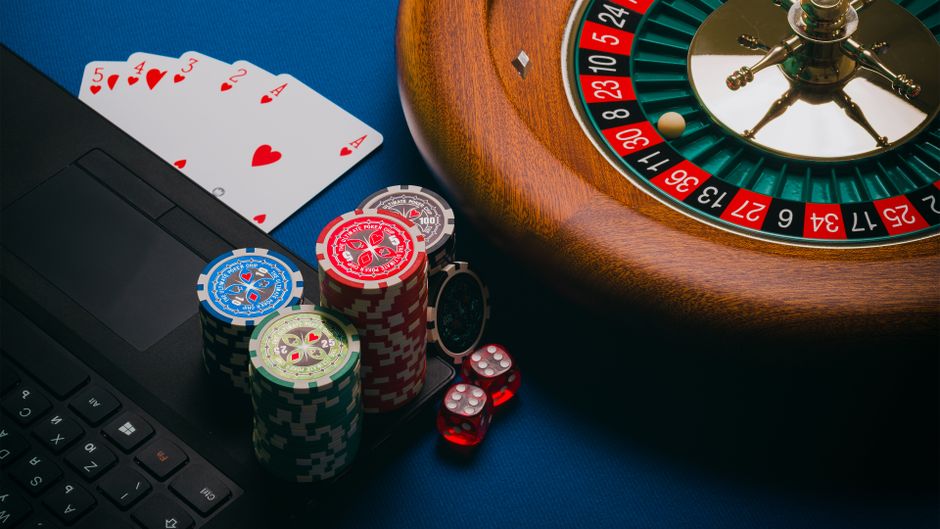
You've seen the flashy ads: a roulette wheel spinning in slow motion, a poker player flashing a royal flush, a slots screen exploding with coins. But what's actually going on behind the curtain of the iGaming industry? Whether you're a casual bettor, a slots enthusiast, or a poker grinder, understanding the mechanics, math, and psychology can transform how you play—and how you win.
Let's cut through the noise. This isn't about hype; it's about practical knowledge you can use at the tables, in the sportsbook, and on the reels.
Every game in a casino—online or off—is built on a mathematical advantage for the operator. That's the house edge. In slots, it's typically 2–10% of all money wagered over time. On a blackjack table with basic strategy, it can be as low as 0.5%. In American roulette, it's 5.26%; in European roulette, 2.7%. The difference? That single zero versus double zero.
Why does this matter? Because the house edge is the tax you pay for the entertainment. The lower the edge, the longer your bankroll lasts. For example, a player betting $1 per spin on a 96% RTP slot will lose, on average, 4 cents per spin. Over 1,000 spins, that's $40. But on a 92% RTP slot, that jumps to $80. Over a year of regular play, that gap becomes massive.
Pro tip: Always check the RTP (Return to Player) percentage before playing a slot. It's usually listed in the game's help screen. Anything above 96% is considered generous.
Betting on sports isn't just about who wins. The real game is in the odds and the margins. Bookmakers build a profit margin—the vig or juice—into every line. For a standard -110 point spread, you need to win 52.4% of your bets just to break even. That's why sharp bettors hunt for value, not certainties.
Consider this: if you bet $100 on 10 games at -110 odds, you risk $1,000. To break even, you need to win 5.24 games. Win 6, and you're up $545? No—let's do the math: 6 wins return $600 (6 x $100) plus $545 in profit? Actually, each win at -110 returns $190.91 ($100 stake + $90.91 profit). So 6 wins = $1,145.45. 4 losses = $400 lost. Net profit = $745.45? That's not right either. Let's recalculate properly: 6 wins x $90.91 profit = $545.46. 4 losses x $100 = $400 loss. Net = $145.46 profit. The point: you need a 52.4% win rate to profit.
Successful bettors focus on three things:
Slots are the most popular casino game, but they're also the most misunderstood. Modern video slots are powered by random number generators (RNGs), meaning every spin is independent. The idea that a machine is 'due' for a payout is a gambler's fallacy.
What you can control is the type of slot you play. High-volatility slots pay less often but can hit huge. Low-volatility slots pay frequently but in smaller amounts. Your choice depends on your bankroll and goals. Want a long session with steady play? Go low volatility. Dreaming of a life-changing jackpot? High volatility is your ticket.
Also, check the max bet. Some jackpots require you to play max coins to qualify. If you're not betting max, you might be leaving the biggest prize on the table. Those comparing choices often turn to สล็อต.
Poker is the only game in the casino where you play against other players, not the house. That means your edge comes from making better decisions than your opponents. But here's the catch: in the short run, luck dominates. You can play perfectly and still lose for months.
To succeed at poker, you need to think in terms of expected value (EV). Every decision should be based on whether it's profitable in the long run. For example, calling a $100 bet into a $300 pot with a flush draw (about 19% equity) is mathematically incorrect unless you have implied odds. That's why understanding pot odds and equity is non-negotiable.
Three habits of winning poker players:
You can be the best slots player or sports bettor in the world, but without proper bankroll management, you'll go broke. The principle is simple: never risk money you can't afford to lose, and never bet more than a small percentage of your total gambling funds on a single bet or session.
Here are some concrete guidelines:
And remember: if you're not having fun, stop. Gambling should be entertainment, not a source of income.
iGaming is a thrilling world, but it's also a mathematical one. The house always has an edge—except in poker, where you can gain an edge over other players. By understanding RTP, volatility, odds, and bankroll management, you shift from being a passive participant to an informed player.
Whether you're spinning the reels, sweating a parlay, or bluffing on the river, knowledge is your best ally. Play smart, play within your means, and never forget: the goal isn't just to win—it's to enjoy the ride. And if you ever feel it's not fun anymore, walk away. The games will still be there tomorrow.

Peace Revitt shares practical, down-to-earth guidance on peaceful living, mindfulness and everyday wellbeing for readers across the UK.
Stay Tuned With Updates


Leave A Comment